How federated analytics enables decision-ready evidence in pharma
Discover how federated analytics helps pharma generate trusted, decision-ready evidence while enabling scalable, privacy-preserving research.


Life sciences teams are under growing pressure to generate evidence that can support more strategic decisions across the product lifecycle — from development and access to outcomes, safety, AI readiness, and value. Those decisions increasingly depend on complex questions that no single dataset, institution, or geography can answer alone. Relevant real-world data is fragmented across systems, custodians, and markets, making it harder to generate evidence that is timely, representative, trusted, and reusable.
The strategic opportunity is to move from isolated evidence projects to a more repeatable, governed way of generating evidence. By using federated analytics and learning to connect distributed data, trusted processes, and decision-focused insights, life sciences organizations can scale evidence generation across markets, functions, and use cases without forcing sensitive data to leave local control.
Federated analytics and learning make that possible. Instead of requiring teams to copy patient-level data into a single repository, organizations can run approved analyses across local environments while custodians retain control of their data. Teams can then return governed results for synthesis, review, and decision-making. This approach lets evidence teams work with broader, more relevant data sources while reducing delays, complexity, and the risks associated with repeated data transfers.
The challenge is shifting from simply finding relevant data to creating a dependable way to use distributed data across partners, markets, and decisions. Teams need an operating model that keeps data governed locally while making the resulting evidence consistent, comparable, trusted, and decision-ready enough to inform strategy across the lifecycle.
The next advantage in real-world evidence will come from organizations that can align distributed data, governance, analytics, and stakeholder needs in one repeatable evidence model. Federated analytics and learning make that model possible.
The value comes from changing how teams plan, govern, and deliver evidence. Sponsors and research partners should start with the decision they need to support, then bring the right data sources, partners, geographies, governance model, and analytics environment together around that purpose. This can shorten feasibility cycles, improve access to relevant populations, support multi-country collaboration, and create outputs that can inform future studies, markets, and evidence needs.
Fragmentation also shows up inside the organization. Evidence plans often involve multiple functions working against different timelines, standards, and governance processes.A federated approach gives teams a shared way to define evidence questions, coordinate analyses, and align on outcomes. As a result, clinical, medical, market access, HEOR, safety, and commercial stakeholders can work from the same foundation.
Federated analytics runs approved queries and analyses across distributed data environments. It then returns governed outputs for evidence work. It is well suited to feasibility, cohort discovery, treatment-pattern analysis, HEOR, safety, outcomes, and other RWD / RWE questions. In these cases, patient-level data remains under local control.
Federated learning extends that same principle into AI. It supports model training, testing, validation, and updates across local environments. As a result, models can learn from broader data without centralizing sensitive patient-level records.
As evidence programs mature, these capabilities can work together. Organizations often start with federated analytics to answer established RWD and RWE questions. They then extend into federated learning as their data partnerships, governance model, workflows, and technical environment mature and begin to support AI-enabled research.
The shift becomes more powerful when federation is built into how evidence is generated. Teams can define the question, identify the right data partners, agree on common definitions, and run governed analyses across local environments. This approach is easier to repeat and easier to defend.
When federation is built into evidence generation, global evidence strategies have a stronger foundation. Instead of rebuilding the approach for each study, market, or data partnership, organizations can reduce duplication, preserve local control, and make results more comparable across settings.
| Capability | What it supports | Typical outputs |
|---|---|---|
| Federated analytics | Approved RWD and RWE queries and analyses across distributed data environments | Cohort counts, feasibility results, treatment patterns, biomarker prevalence, HEOR analyses, safety and outcomes summaries |
| Federated learning | AI model training, testing, validation, and updates across distributed datasets | Model updates, parameters, performance metrics, validation results, and monitoring outputs |
AI-ready federated evidence depends on governed access, usable data, traceable workflows, and responsible model oversight.
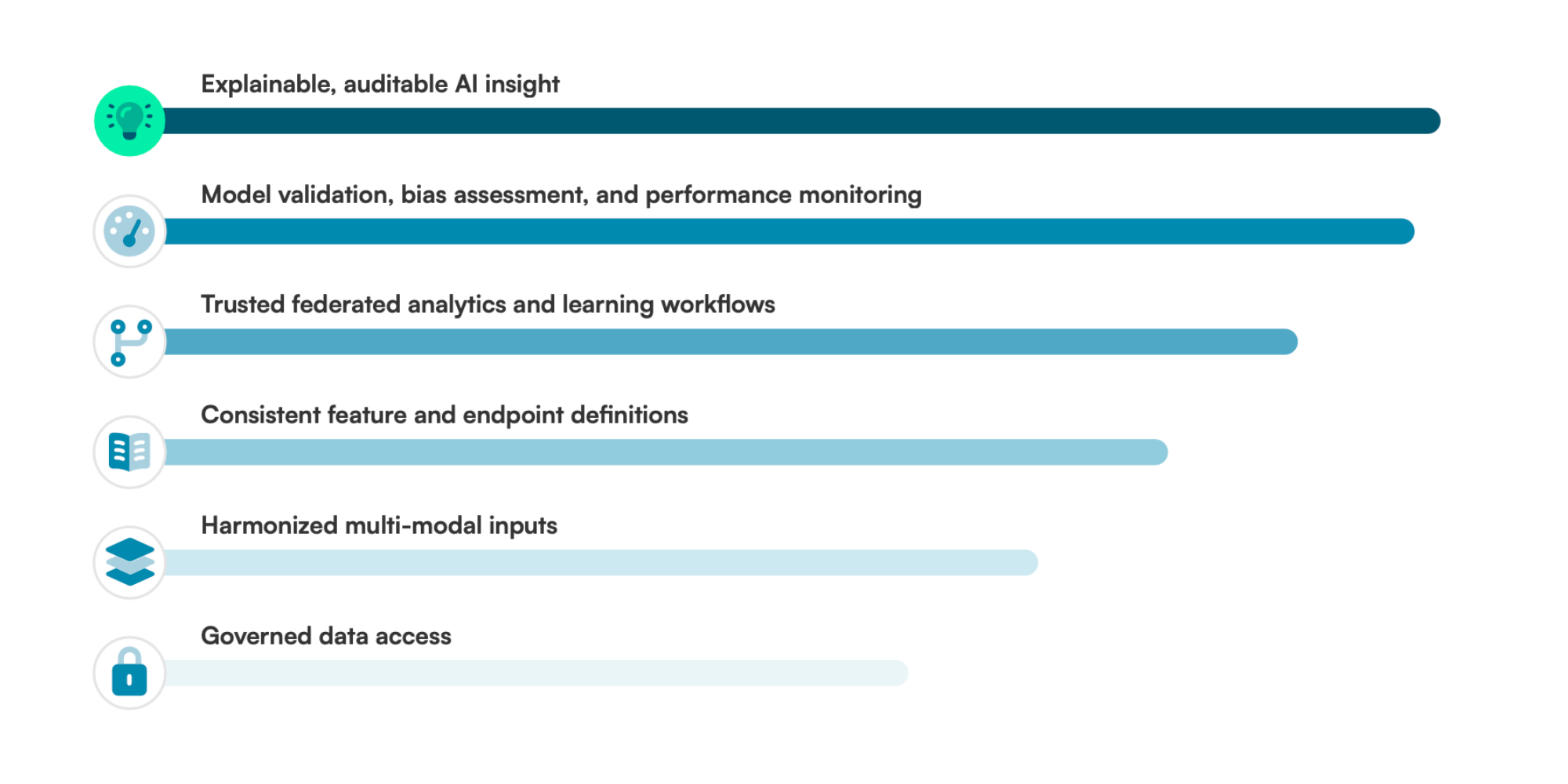
Federated and hybrid models create the most value when evidence depends on sensitive, distributed data that organizations cannot easily centralize. But access alone is not enough. Trusted, decision-ready evidence requires harmonized data, governed and reproducible analyses, transparent review, and clear auditability.
As AI becomes more embedded in evidence generation, confidence in outputs depends on confidence in the data, provenance, validation, and governance behind them. Organizations that align distributed data, teams, and evidence workflows around key decisions will turn federation from an access model into a strategic evidence capability.
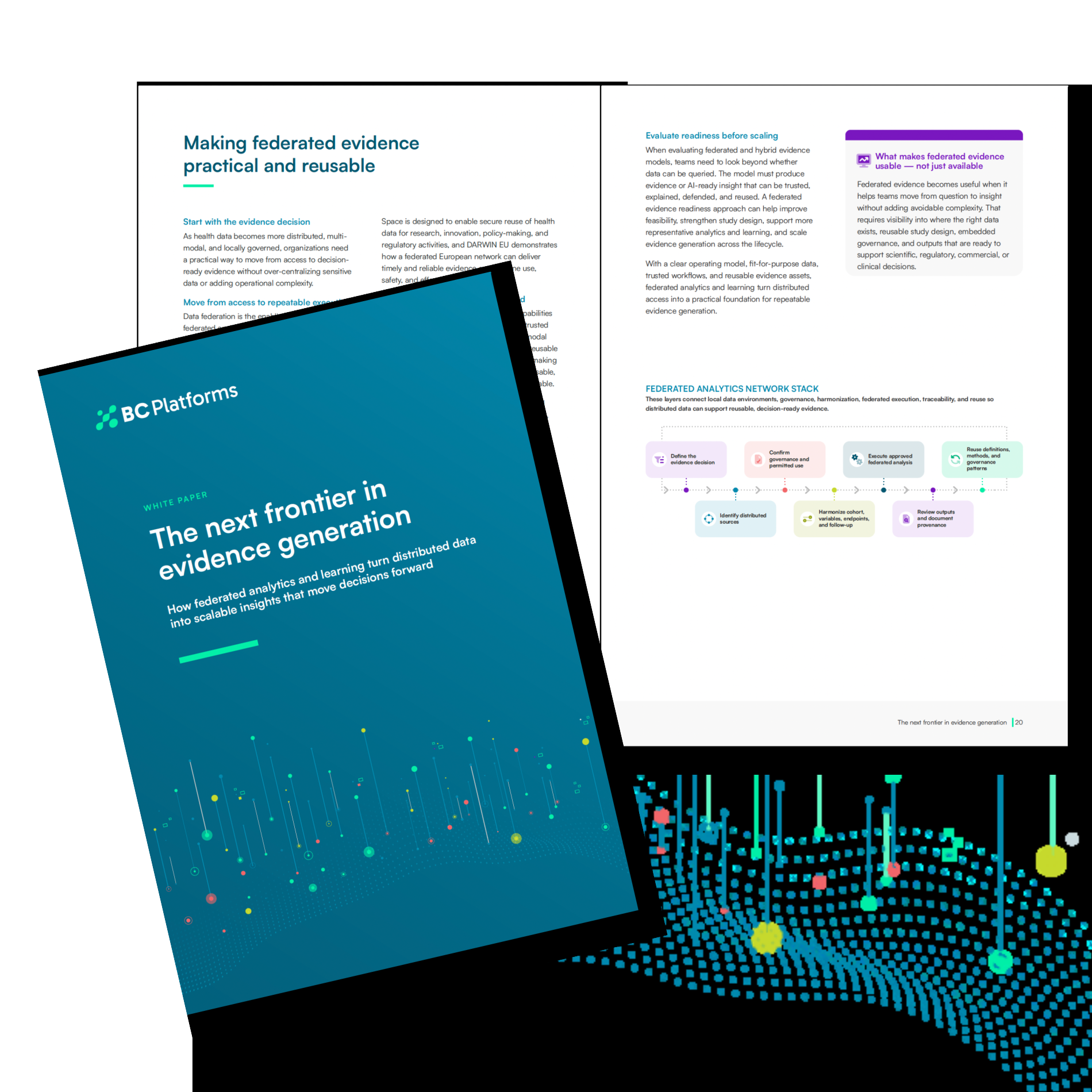
Read The Next Frontier in Evidence Generation to learn how your team can build a more connected, governed, and AI-ready approach to evidence generation — one that helps turn distributed data into insights you can use across the product lifecycle.
Life sciences organizations are adopting federated analytics to generate evidence from distributed data sources while maintaining local data governance. This approach can help expand access to relevant patient populations, support multi-country studies, and reduce the complexity associated with repeated data transfers.
Federated analytics is particularly valuable when evidence questions depend on sensitive or geographically distributed data that cannot be easily centralized. Common use cases include feasibility assessments, treatment-pattern analyses, outcomes research, safety studies, and health economics and outcomes research (HEOR).
Federated analytics enables approved analyses to run across distributed data environments while data remains under local control. Organizations can combine governed outputs to generate evidence that is more representative, scalable, and reusable across studies, markets, and decision points.
Federated learning allows AI models to be trained, validated, and updated across multiple data environments without centralizing patient-level data. This approach helps organizations leverage broader data sources while supporting governance, privacy, and local control requirements.
Federated access enables organizations to work with distributed data. Evidence readiness goes further by combining data access with harmonization, governance, reproducible analytics, transparency, and auditability to support trusted, decision-ready outputs.